Difficulty Breathing in Pets: Emergency Signs Pet Parents Should Know
 Mila Flowers
September 24, 2026

 Mila Flowers
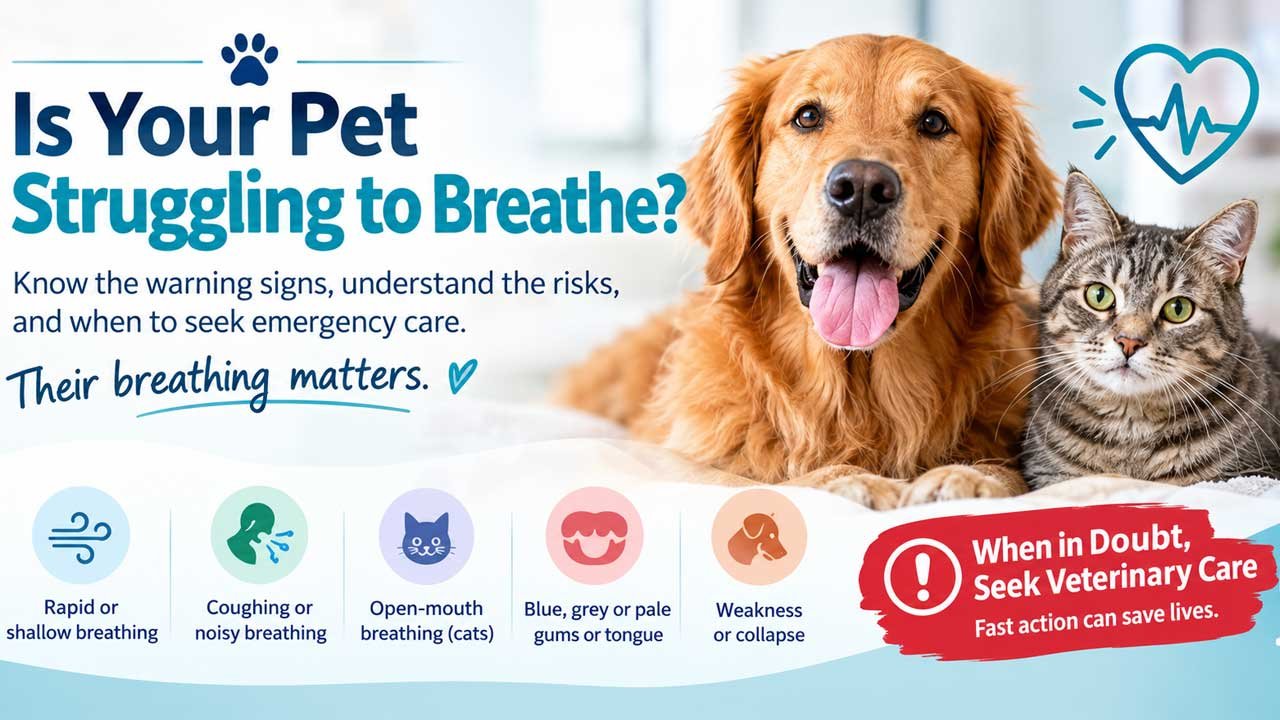
Breathing should normally be comfortable and relatively effortless for dogs and cats. When a pet suddenly struggles to breathe, it should never be ignored. Respiratory distress can have many causes, including heart or lung problems, airway obstruction, allergic reactions, trauma, and heat-related illness.
Watch for changes that are different from your pet’s normal breathing.
Important warning signs include:
A pet that cannot find a comfortable position or repeatedly gets up after lying down may also be experiencing respiratory distress.
Cats often hide signs of illness, which can make breathing problems difficult to notice early.
Open-mouth breathing or panting in a cat is not normal and should be treated as an emergency.
Cats with respiratory distress may sit upright, extend their neck, breathe rapidly, or avoid lying down.
Pets naturally breathe faster after exercise, excitement, or stress. The concern is breathing that remains unusually fast while the pet is resting.
A consistently elevated resting breathing rate can be a warning sign, particularly when it occurs with coughing, weakness, restlessness, or increased breathing effort.
Do not wait for symptoms to improve if your pet is clearly struggling to breathe.
Seek immediate veterinary attention if your pet has:
A Veterinary Clinic Edmonton can evaluate pets with breathing changes and determine whether further testing or treatment is required.
However, severe breathing difficulty should be treated as an emergency. An Emergency Vet Clinic Edmonton can provide urgent assessment and stabilization when a pet is in respiratory distress.
If your pet suddenly develops serious breathing problems, contact an Emergency Vet Edmonton service or proceed to the nearest emergency veterinary facility without delay. Respiratory emergencies receive high priority because pets can deteriorate quickly.
When in doubt about your pet’s breathing, it is safer to seek veterinary care promptly rather than wait for the condition to worsen.
